
RightAudience
Who should you sell to?
Test your offer across different customer segments. Find out which audience has the highest purchase intent for what you’re building - before you commit to a go-to-market motion that targets the wrong people.
| ← Back to Right Suite | Run a simulation |
The Problem
Most founders pick an ICP based on who they know, who replied to their first outreach, or who they assumed the product was for. The assumption feels reasonable. Then the deal cycle is too long, the churn is too high, and the referrals don’t come.
The segment with the highest purchase intent is often not the one you started with.
Selling to the wrong segment wastes sales cycles, inflates churn, and distorts your roadmap. You build features for customers who were never going to renew. You write copy for a persona that wasn’t going to buy. Every downstream decision compounds in the wrong direction.
72% of early-stage deals are lost to segment mismatch, not product quality.
How It Works
1. Describe your offer and segments Share what you’re building, the problem it solves, and the 2-4 segments you’re considering. You don’t need polished copy - rough descriptions work.
2. Simulation runs The simulation tests your offer across multiple synthetic buyer segments with different demographics, roles, seniority levels, and pain profiles. Buyers evaluate whether your offer solves a real problem for them, how urgently they’d act on it, and what it would take to make them buy.
3. Read your report A ranked scorecard of your candidate segments - by purchase intent, willingness to pay, and conversion likelihood. You’ll see what drives each segment’s intent and what holds them back.
What You Get
| Output | What it tells you |
|---|---|
| Segment purchase intent ranking | Which customer types are most likely to buy, in order |
| Willingness to pay by segment | Expected price sensitivity across different audience profiles |
| Objection breakdown by segment | What holds each audience back from buying |
| ICP clarity score | How well your current positioning speaks to your ideal customer |
| Expansion map | Adjacent segments you could unlock after your primary beachhead |
| Go-to-market sequencing | Recommended order to attack segments based on conversion probability |
Before / After
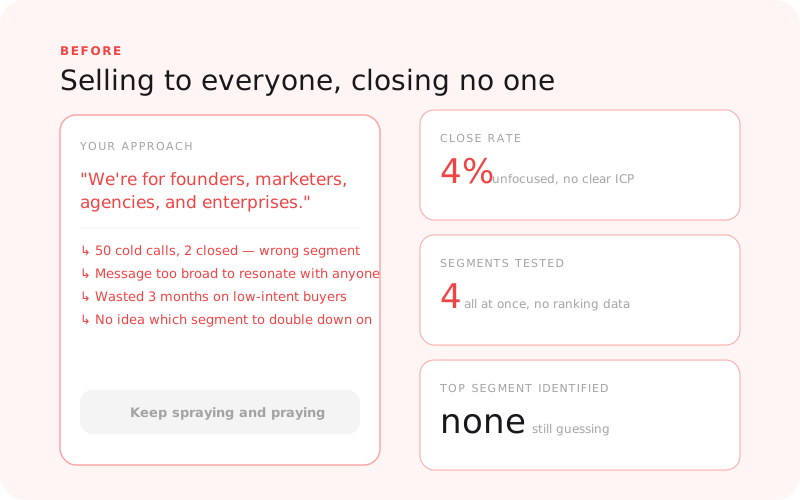
Before: guessing which segment to focus on |
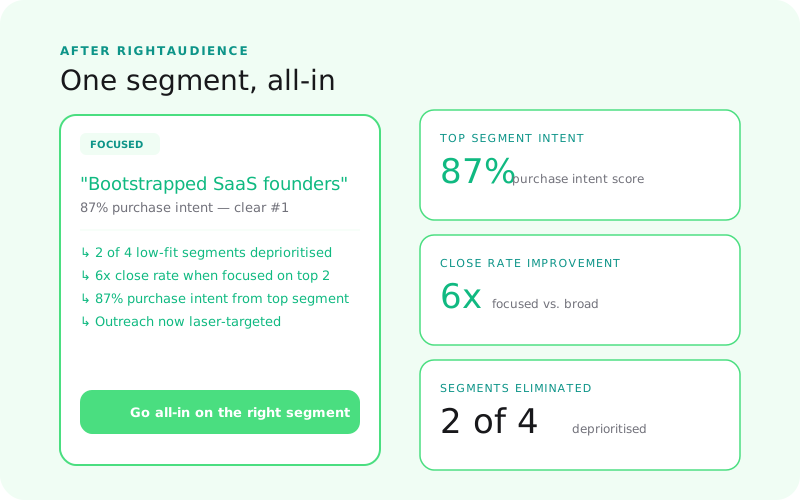
After: ranked segment scorecard in minutes |
Run RightAudience First
RightAudience is step 1 in the GTM journey because every downstream decision depends on knowing who you’re selling to:
- RightPositioning needs a target segment to evaluate competitive perception against
- RightPrice needs a target segment to model price sensitivity for
- RightMessaging needs a target persona to test copy against
- RightEngagement needs a target persona to model outreach response from
You can run any product without RightAudience - but the results sharpen once you know your segment.
Boundaries
- RightAudience vs. RightPositioning - RightAudience tells you who to sell to. RightPositioning tells you how to win the comparison against competitors for that segment.
- RightAudience vs. RightMessaging - RightAudience ranks segments by purchase intent. RightMessaging tests whether your copy converts that segment.
- RightAudience vs. RightChannel - RightAudience identifies who your buyers are. RightChannel tells you where to reach them.
Related Guides
- How to Find Your ICP When You Have No Customers Yet
- Why Your SaaS Customers Are Churning Early
- How to Choose Between Two Target Audiences
Who Uses This
- RightAudience for SaaS Founders Pre-Traction - validate your ICP before you commit to a GTM motion
- RightAudience for Agency Founders Repositioning - find the client segment that values your specific expertise most
- RightAudience for Growth Teams - catch segment drift before it shows up in win rates
- RightAudience for Indie Hackers - know who to build for before you spend 3 months on the wrong audience
Status
Live - www.rightsuite.co/products/right-audience